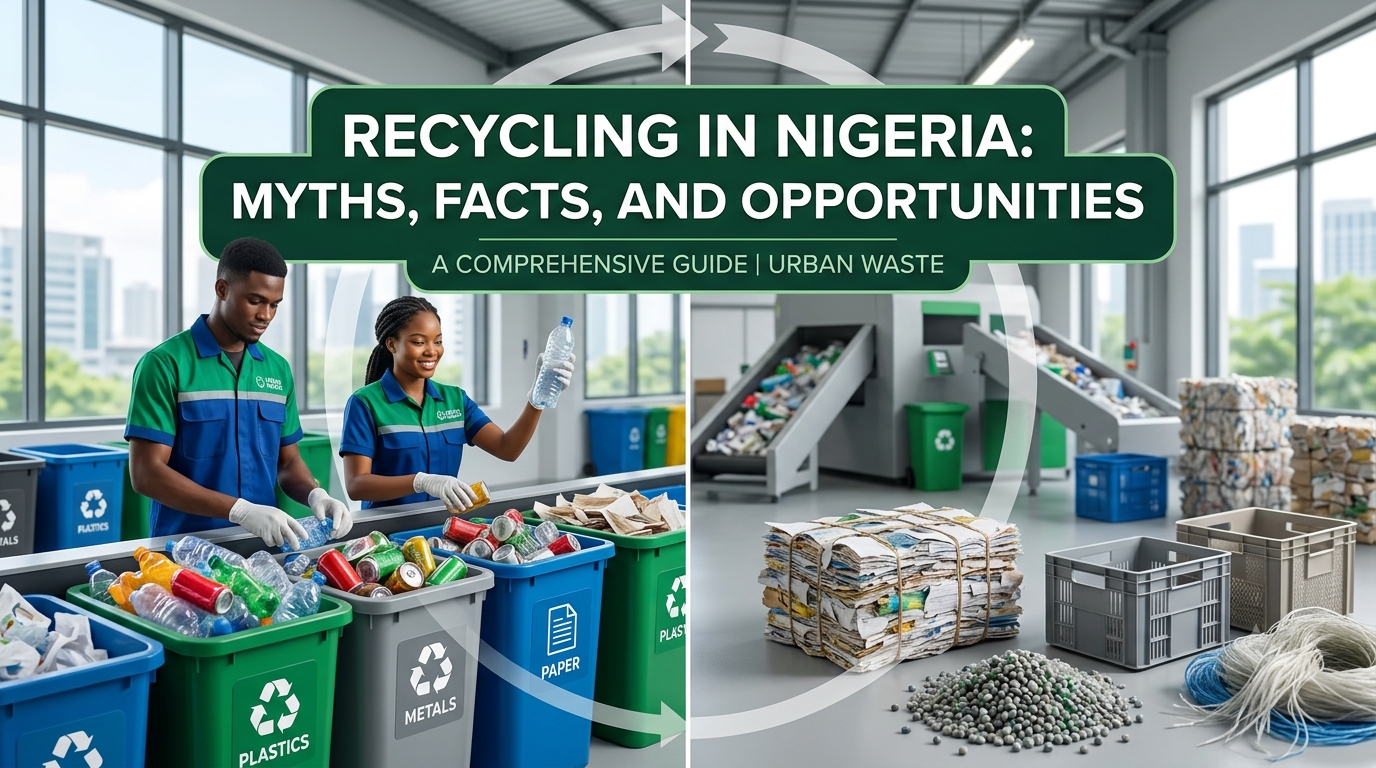
Mention the word “recycling” to five different people in Nigeria, and you will likely get five completely different reactions.
Some view it as an inspiring environmental movement, others see it as a lucrative business opportunity, while many remain skeptical—doubting whether separated trash ever actually gets recycled at all.
With millions of tonnes of waste generated across Nigerian towns and cities every year, recycling is no longer just a trendy buzzword. It is a critical component of modern urban infrastructure.
To help clear the air, let’s break down the most common myths surrounding recycling in Nigeria, separate fiction from fact, and highlight the real opportunities ahead.
Debunking Common Recycling Myths
Myth 1: “Everything goes to the same dump site anyway.”
- The Fact: While informal waste collection has historically mixed all garbage together, structured recycling chains are actively operating across major cities today. Primary sorting centers, buy-back hubs, and specialized recycling plants ensure that properly separated recyclable materials are kept out of municipal landfills and redirected to production lines.
Myth 2: “Recycling is too expensive to be worth it.”
- The Fact: Recycling actually saves money in the long run. Manufacturing products from recycled materials consumes significantly less energy and water than producing items from raw virgin resources. On an individual level, sorting recyclables can even generate secondary income through local buy-back initiatives.
Myth 3: “Individual efforts don’t make any difference.”
- The Fact: Every plastic bottle, glass jar, or cardboard box you recycle adds up. A single household that sorts its waste keeps hundreds of kilograms of refuse out of local drainages and streets every year. When thousands of homes make that same choice, entire communities benefit from reduced flooding and cleaner air.
Myth 4: “Only plastics can be recycled in Nigeria.”
- The Fact: While plastic recycling receives the most public attention due to pollution concerns, many other materials are routinely recovered and reprocessed, including metals, paper, cardboard, glass, and electronic waste.
What Materials Can Actually Be Recycled?
Knowing what to separate makes household and workplace waste management far more effective. Here is a quick reference guide:
| Material | Recyclable Items | Common Reusable Products |
| Plastics | PET drink bottles, detergent containers, plastic buckets, nylon packaging | Synthetic fibers, new containers, strapping tape |
| Paper & Cardboard | Carton boxes, newspapers, office paper, cereal boxes | Tissue paper, egg trays, recycled packaging materials |
| Metals | Aluminum drink cans, tin cans, scrap metal, roof sheets | New cans, construction hardware, automotive parts |
| Glass | Soda bottles, food jars, beverage containers | New glass bottles, construction aggregate |
The Massive Opportunities in Nigeria’s Recycling Industry
Recycling is transforming from a basic environmental task into a booming green economy. In a country with a high population and expanding urban centers, sustainable waste recovery offers significant potential:
- Job Creation: The recycling chain requires workforce participation at every stage—from neighborhood collection agents and sorting hub operators to machine technicians and logistics managers.
- Industrial Cost Savings: Local manufacturers increasingly rely on recycled plastic pellets and recovered paper pulp to lower production costs and reduce expensive raw material imports.
- Environmental Protection: Recycling directly reduces the volume of plastics washed into gutters, rivers, and coastal ecosystems, preserving marine life and keeping drainage systems flowing freely.
How Urban Waste Supports Responsible Waste Management
At Urban Waste, we believe that solving waste challenges requires reliable systems, public education, and smart technology.
We work alongside households, commercial estates, and corporate organizations to make waste recovery seamless:
- Structured Collection: Providing scheduled waste pick-ups that ensure recyclables reach certified processing centers rather than open dumps.
- Corporate Sustainability Advisory: Helping businesses set up internal waste-sorting programs and track their environmental footprint.
- Community Outreach: Educating residents on practical waste management techniques to foster cleaner neighborhoods.
Conclusion
Recycling in Nigeria is moving past outdated misconceptions into a era of tangible environmental and economic progress. By understanding the facts and making simple adjustments to how we dispose of everyday items, we all play a role in building a sustainable future.
Recycling starts with awareness. Learn how Urban Waste can help you or your organization implement more sustainable waste management practices today. Contact us to schedule a consultation or request a custom waste collection plan!
Leave a Reply