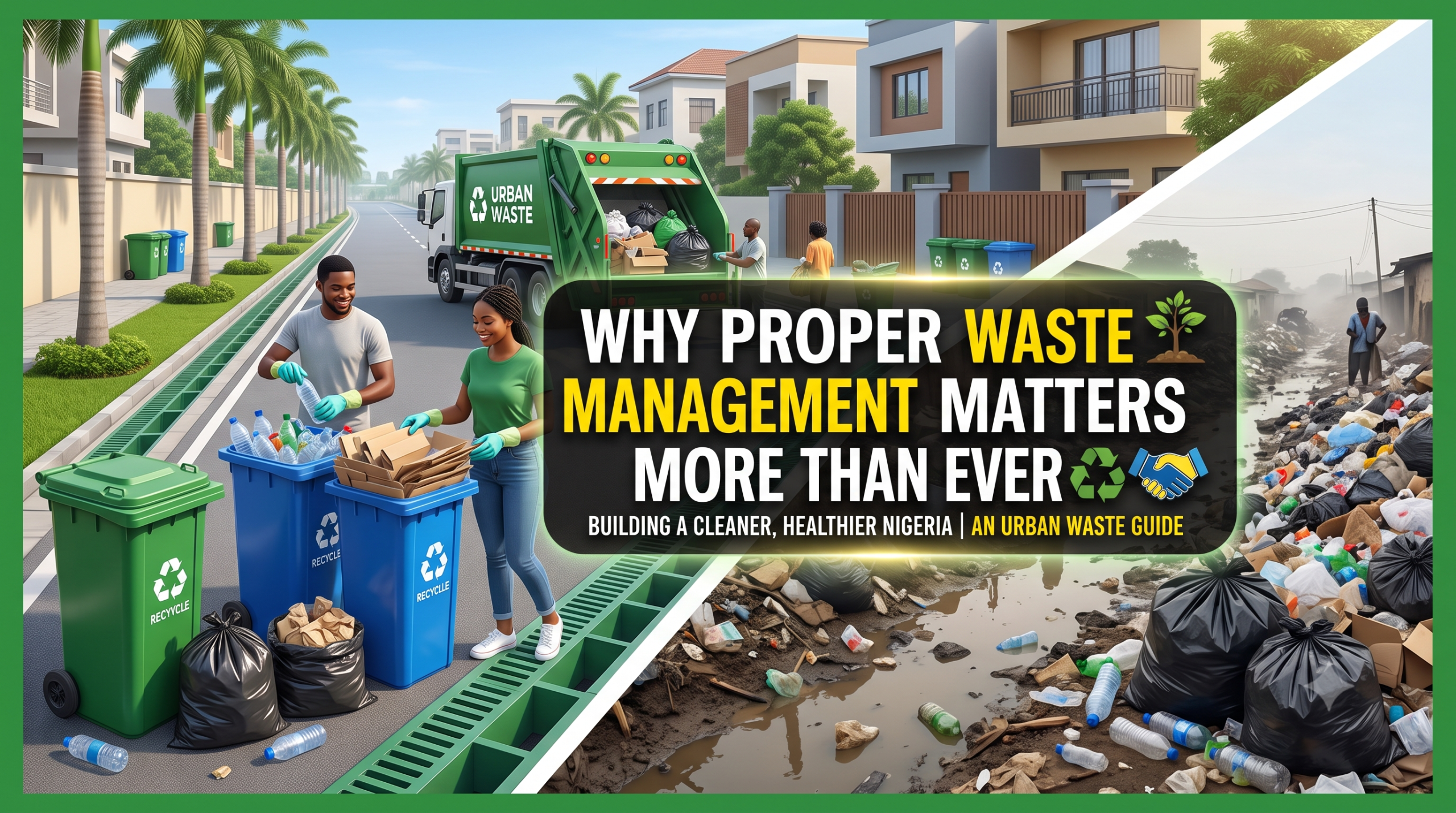
Every morning across Nigerian cities, millions of people step out to begin their daily routines. But along street corners, market stalls, and drainage channels, an uninvited guest is already waiting: piles of overflowing, uncollected rubbish.
Nigeria generates an estimated 32 million metric tonnes of solid waste annually, making it one of the largest waste producers in Sub-Saharan Africa. Yet, only about 20% to 30% of this waste is collected through formal waste management systems. The remaining portion ends up dumped in open fields, washed into gutters, or burned in neighborhoods.
Managing waste is no longer just about keeping our streets tidy; it is a vital public health requirement, an environmental necessity, and a hidden economic opportunity.
What Is Waste Management?
At its core, waste management refers to the structured process of collecting, transporting, processing, recycling, and safely disposing of waste materials.
It covers everything from household kitchen refuse and commercial packaging to industrial waste and hazardous chemicals. Effective waste management ensures that materials are handled safely from the moment they are discarded until they are either safely disposed of or transformed back into useful products.
Common Waste Disposal Challenges in Nigeria
To solve a problem, we must first understand what is holding us back. Urban areas across Nigeria face several structural and behavioral challenges when it comes to managing refuse:
- Inadequate Collection Infrastructure: Many residential areas—especially low-income communities—lack consistent municipal waste collection services.
- Low Recycling Rates: Out of the 1.5 million tonnes of plastic waste produced in Nigeria each year, less than 10% is formally recycled.
- Open Burning and Dumping: With limited options, many households resort to burning trash in their yards or dumping it into nearby drainages when it rains.
- Limited Waste Sorting at Source: Most households bundle organic food scraps, plastics, glass, and paper into a single trash bag, making recovery and recycling significantly harder.
The Real Cost: Environmental and Health Impacts
When waste is discarded improperly, the consequences ripple through every part of our daily lives.
1. Urban Flooding
Clogged gutters and waterways are one of the primary triggers of severe urban flooding during the rainy season. When plastic bottles and nylon bags block drainage channels, water backs up into roads and homes.
2. Public Health Risks
Uncontrolled dumpsites serve as breeding grounds for mosquitoes, rodents, and bacteria. Poor waste practices directly contribute to higher rates of malaria, cholera, and respiratory illnesses caused by inhaling toxic fumes from open waste burning.
3. Soil and Water Contamination
As rain passes through unmanaged waste dumps, harmful chemicals leak into the surrounding soil and underground water tables, contaminating natural resources that local communities rely on for drinking and farming.
The Hidden Economic Benefits of Proper Waste Management
Waste isn’t just refuse—it is a resource in the wrong place. Over 50% to 70% of municipal waste in Nigeria is organic material (such as food scraps and plant matter).
When managed systematically, waste creates valuable economic avenues:
- Job Creation: A thriving recycling and waste recovery sector creates thousands of green jobs in sorting, collection, processing, and manufacturing.
- Composting and Agriculture: Organic waste can be converted into rich, organic fertilizer to support domestic farming and soil restoration.
- Energy Recovery: Modern waste management systems can convert non-recyclable materials into energy, reducing reliance on fossil fuels.
- Resource Conservation: Recycling plastics, metals, and paper reduces the raw materials needed to manufacture new products.
A Shared Responsibility: Who Plays What Role?
Building a cleaner, healthier Nigeria requires active participation across every level of society:
- Households: The first line of defense. Proper waste sorting, reducing single-use items, and working with verified waste collectors start at home.
- Businesses: Commercial entities must adopt sustainable packaging, enforce waste-reduction policies in their offices, and partner with licensed waste management providers.
- Government: Policymakers must enforce environmental regulations, support private sector partnerships, and invest in modern waste disposal infrastructure.
Practical Actions You Can Take Today
You don’t need to wait for structural changes to start making an impact. Here are four simple steps you can take immediately:
- Separate Your Waste: Keep food scraps separate from recyclable items like plastic bottles, glass, and metals.
- Stop Open Burning: Avoid burning household refuse. The toxic smoke directly impacts the lungs of your family and neighbors.
- Say No to Single-Use Plastics: Carry a reusable shopping bag or water bottle to reduce daily plastic waste.
- Partner with Verified Collectors: Ensure your waste is collected by registered management services rather than informal dumpers who empty refuse into canals or streets.
Conclusion
Proper waste management is no longer an optional convenience—it is essential for our health, our environment, and our future economy. By making intentional choices at home, at work, and within our communities, we can build a cleaner and safer living space for everyone.
Looking for a reliable waste management partner?
Contact Urban Waste today to learn how we can help your home, business, or community manage waste more sustainably and efficiently.
Leave a Reply